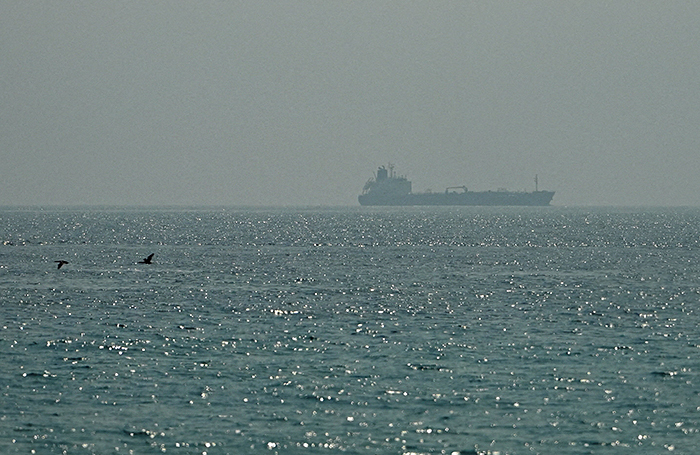
The diesel arrangement between Washington and Moscow appears to be coming apart, according to reporting by the Financial Times cited by BFM.ru on 5 November 2026. Two of the three tankers that had been carrying Russian fuel toward the United States have altered their routes, and the third may follow.
BFM.ru reports that the vessel Talisman, sailing under the Russian flag, has moved into the Mediterranean and is now anchored off the coast of Algeria. A second ship, owned by a Hong Kong company called Leruo and flying the flag of Sierra Leone, is heading toward Brazil. Both are broadcasting a "waiting for orders" signal, which indicates that neither cargo has a confirmed buyer or destination port.
The third tanker was still on course for the US as of the report, according to tracking data from MarineTraffic. It is also signaling that it awaits instructions, and the analytics firm Kpler suggests it too could change direction.
Why it matters
The diversion of the tankers is the clearest sign yet that the fuel agreement, negotiated while it was politically useful to the US president, has lost its footing. BFM.ru frames the shift against the outcome of the US midterm elections: Democrats took both chambers of Congress, and the political rationale for the deal has faded. For Russia, the episode tests how easily fuel cargoes can be redirected to other buyers, while for Washington it raises questions about whether an executive-branch arrangement can survive a hostile legislature.
Objections predate the vote
According to BFM.ru, opposition to the diesel deal was already visible while it was being finalized. A group of Democratic senators argued against it and urged that tankers loaded with Russian fuel be kept out of American ports.
That resistance has now acquired institutional weight. With Democrats in control of both houses, the Senate Foreign Relations Committee has asked banks and other organizations involved in the transaction to hold on to their records in anticipation of forthcoming investigations, BFM.ru reports.
The newspaper's account suggests the arrangement has simply outlived its political purpose. With the elections over and Republicans having lost Congress, there is little surprise in the fuel being offered to buyers who need it more, BFM.ru writes. The outlet quotes Konstantin Simonov, director general of the National Energy Security Fund and a professor at the Financial University, who argued that the tankers' change of course should not be treated as a disaster for Russian oil and petroleum product exports, noting that it was clear from the start that the diesel deal did not have [the passage is truncated in the source].
Conflicting accounts from Moscow
The picture is further clouded by disagreement over what the ships are actually doing. Kirill Dmitriev, named in BFM.ru's news feed, called the Financial Times report of a collapsed diesel deal a fake and said the tankers sent to the US had not altered their route.
The Kremlin, meanwhile, has rejected any link between the movement of Russian diesel tankers and the American elections. Dmitry Peskov, the presidential spokesman, said no connection exists between the fuel agreement and the US vote, according to BFM.ru's feed. The same feed records Peskov saying the Kremlin does not expect Trump's foreign policy to change.
These statements sit awkwardly beside the tracking data cited by BFM.ru, which shows two vessels far from their original American destinations. The discrepancy between official Russian commentary and ship-position records is likely to be a focus of the congressional inquiries the Senate committee is preparing.
A deal under multiple pressures
BFM.ru's report places the diesel episode in a broader political moment. The same day's news feed notes that Bloomberg reported Trump would turn his attention to foreign policy after his party's election defeat, while Reuters reported that Democrats may use their new majority to constrain his foreign policy. Both items suggest the space for arrangements like the diesel deal has narrowed.
The mechanics of the transaction also matter. A "waiting for orders" signal typically means a vessel has no fixed discharge plan, leaving the cargo free to be sold elsewhere. For exporters, that flexibility can be an advantage; for a deal that depended on specific deliveries to US ports, it is a liability.
BFM.ru does not specify the volumes involved, the value of the cargoes, or which US ports were originally intended. It also does not say whether any fuel has already been delivered under the arrangement.
What to watch: whether the third tanker follows the others away from the US, and whether the Senate Foreign Relations Committee's document requests turn into formal hearings.